Make the Change that Finally Lasts
Stop the dieting and weight loss cycle by finally learning the skills, mindsets, habits and approaches to not only lose the weight but keep it off with the right support on your weight loss journey
Watch: To learn how this time can be different

Next Step: Complete the Survey Below to See if you would be a Good Fit
For people who want more than weight loss: they want it to last.
Lose weight safely, protect your muscle
Eat to nourish your body, hunger or no hunger
Rebuild your relationship with food, and yourself
Break the diet cycle for good
Build skills that protect your results
1:1 Support with A dietitian in your corner
STILL NOT SURE?
Frequently Asked Questions
Here's what we usually get asked
I'm having surgery to lose weight. Why would I need a dietitian?
Because the surgery is a tool, and a tool is only as effective as how you learn to use it.
Depending on the operation, bariatric surgery changes how much food you can comfortably eat, and sometimes how much your body absorbs. What it doesn't change is your lifestyle, the food you choose, your history with dieting, your relationship with food and with yourself, or the patterns and beliefs that led to weight gain in the first place and made it so hard to shift.
The surgery creates a window of opportunity: a period where change is easier than it has ever been, and easier than it will ever be again. But what you achieve inside that window is determined by what you actually do with it. People get radically different results from the same operation, because people do radically different things after the operation.
Our work together focuses on helping you safely and sustainably get the maximum result you want from your surgery. And not just to achieve it, but to build the skills, habits, routines, lifestyle and identity that let you keep it for life.
Why do so many people regain weight after bariatric surgery?
Because the surgery changed their body for a period of time, but nothing else changed.
Regain after weight loss surgery is common and well documented, and it is not a character flaw. It's what happens when people are handed a powerful tool without the support and training to use it effectively. When the early results arrive on their own, it's easy to believe the work is done. Then life happens, old patterns return, and there are no solid foundations underneath to hold the result in place.
Without real change, real work and real guidance, results are rented, not owned.
The good news is that regain has knowable causes, and almost all of them can be addressed when someone actually addresses them. This is work that's done far better proactively than reactively, and it is precisely the work we do together throughout your bariatric surgery journey.
What will I get from working with you that I won't get from my surgeon or the operation itself?
Bariatric surgeons are incredibly skilled, and weight loss surgery is a remarkable intervention. Your surgeon's role is to help you decide whether surgery is right for you, select the best procedure, perform it safely, and make sure you heal and recover well.
But once the operation is performed, there's very little more the surgery itself can do for you. Your long-term result isn't decided by the operation. It's decided by the change you're able to make during the window of opportunity it creates.
That's the gap I fill. I provide the structure, the framework and the professional support for the whole journey:
Preparing properly, so you enter surgery physically, psychologically and logistically ready for the best outcome. Navigating the early texture stages well, while giving your body the key nutrients it needs to heal and recover. And then the part almost nobody gets: navigating the first twelve months and beyond, building the habits, lifestyle and lasting change so your result doesn't just arrive, it lasts.
I've helped hundreds of people through weight loss surgery, and I work alongside surgical teams across Australia, not around them.
Most people invest heavily in the operation itself, and almost nothing in learning how to use it. Yet it's what you do after surgery that determines what the operation was worth. It makes sense to learn how to use the tool you've paid so much to receive.
I've had advice before. I've even seen dietitians before. How is this different?
Most of what you've had before was information. What to eat, what to avoid, perhaps a plan you followed for a few weeks or even a few months. And if information created change, you would have changed years ago.
My approach works beyond the level of advice, at the deeper level where behaviour actually lives. Yes, I provide professional, evidence-based guidance on losing weight safely, but that's only the start. The real work is helping you move from knowing what to do to doing what you know, consistently. That's where everything changes.
Together we build the skills, mindsets, beliefs, habits, routines and identity that make weight loss last, and that add quality to your life rather than shrinking it. This isn't about following a plan harder. It's about becoming the person for whom the result is simply how you live.
That's the difference between losing weight and truly changing. Between knowing and doing. Between renting your results and owning them.
What does "psychologically informed" actually mean, and why does it matter for me?
It starts with one honest observation, drawn from thousands of hours of clinical work with people trying to change: information does not equal behaviour change.
Most people who come to me already know a great deal about food. They've spent years trying different diets and ways of eating, losing weight for a while, and watching it return, often with interest. That's not an information problem. But this is exactly how the weight loss industry keeps thriving: by treating it like one. The next diet, the next perfect way of eating, the next promise that this time the information will finally work. And when it doesn't, you're left believing you failed, when really the approach did.
It was never an information problem, and it was never a willpower problem. It's a psychological challenge, and it deserves to be treated as one.
As a dietitian with a degree in psychological science, I build that human understanding into everything I do. It shapes all of my work: working with the parts of you that have found change difficult, creating a vision and goals with real depth, and moving beyond motivation and meal plans into deep, lasting change.
This is both an art and a science, and it's the part of the journey almost nobody is given. It's often the difference between achieving your goals and maintaining them, and staying caught in the cycle: gain and loss, all or nothing, success and failure, again and again.
I've already had my surgery, and I've regained some weight. Is it too late?
No. It's never too late, and you won't get judgement from me. You'll get the support that was missing.
While many people start with me before their operation and I support them through the whole journey, I also work with people at every stage after surgery. Weight regain is one of the most common reasons people find me. Ongoing symptoms they haven't been able to resolve is another. Whatever brings you here, there is important work we can do, and real change we can make.
Regain is a signal, not a verdict. It tells us something wasn't addressed yet, and our job is to find out what, and to work with it. The window for change is still open. It just needs to be used deliberately this time, with the right support, structure and framework behind you.
Wherever you are in your journey, it's not too late. If you're ready to do the work, I'm ready to do it with you.
What does working with you actually look like?
Not like a single appointment where you're handed a plan and sent on your way. Real change, the kind that's still holding years from now, doesn't come from one session or one meal plan. It comes from the right support, applied consistently, through the stages where it matters most: your preparation, and the first one to two years after your operation. That period sets the trajectory for everything that follows, and it's the window we use deliberately.
That's why my bariatric support is built around structured programs rather than one-off appointments. The Foundations Package and the Transformation Program each map the journey from preparation through the first year, with regular sessions timed to the stages you'll actually move through, plus resources and support that work between sessions, not just during them. Change doesn't happen in appointments. It happens in your life, and the structure is built for exactly that.
You're also welcome to book individual appointments instead. Some people prefer to start that way, and that's completely fine. It's worth knowing that session by session usually ends up costing more than the equivalent package, without the between-session support and resources that do so much of the work. We can talk through which path fits you best when we speak.
I haven't had my surgery yet. When should I start?
Ideally, before your operation. I like to see people at least four weeks out, and ideally six to eight, because by then your weight loss journey has already started. The surgery isn't the beginning of the journey. It's a step on it, and one of the most important predictors of how that step goes is the preparation that comes before it.
The preparation phase is where we do some of the most valuable work: getting you physically, psychologically and logistically ready, so that you arrive on the day of your operation knowing you've done everything you needed to get what you want from this. Starting early means the window your surgery creates gets used from day one, not discovered halfway through.
With all of that said, there is no wrong time to start. If your operation is closer than that, or already behind you, that's okay. Every stage of this journey needs support. The only real cost is waiting longer for it.
What does it cost, and is there help with funding it?
Less than most people expect, especially in context. The full support program typically comes to around ten to fifteen per cent of what you'll invest in the operation itself, once the surgery, anaesthetic and hospital stay are counted. It's a small fraction of the total, and it funds the part of the journey that determines what the rest of the investment was worth.
I'll always give you clear pricing before you commit to anything. My programs are structured to suit most people's needs, and I'm happy to adjust around your circumstances.
There are also several established pathways that help fund this work. If you're eligible, a GP Chronic Condition Management Plan provides Medicare rebates on some appointments. Private health extras cover often includes dietetics. And many bariatric patients access compassionate release of superannuation for their weight loss journey; I'm happy to work with you and your surgical team to provide the documentation that supports this, given proper dietetic care is a core part of preparing for surgery, recovering well, and getting a lasting result from it.
You don't need a referral to see me, you can book directly. A GP plan is only needed for the Medicare rebates, and I'll guide you through it.
Do I need a referral to see you?
No. You can book directly, and most people do.
A GP Chronic Condition Management Plan is only relevant if you're eligible for one and would like Medicare rebates on some appointments. It's worth knowing these plans are shared across all allied health services, so if you're already using yours elsewhere, we can simply work without it.
With your permission, I'll also write to your surgeon and GP so that everyone involved in your care is working together. I work alongside surgical teams across Australia, not around them.
Does telehealth really work for something this personal?
Yes, and it often works better.
People tend to open up more in their own homes than in clinical rooms, and this work goes best where you're comfortable. We see each other, we talk properly, and the connection is real. What disappears is everything around the appointment: the travel, the waiting rooms, the time off work, the hours of driving for a short consult.
That convenience matters more than it sounds. This is a journey of consistent support across a year and beyond, and consistency is what produces change. Telehealth makes the support something you can actually fit into your life: you log in from wherever you are, and I meet you where you're at.
It also means where you live doesn't decide the care you get. I see people right across Australia, including many whose surgical team is hours away, or in another state entirely.
What happens after I complete the survey?
First, I'll personally review what you've shared, so that when we talk, I already understand where you're starting from.
Then, within three business days, I'll give you a call to have a genuine conversation about where you're at, what's been happening, what your needs are, and what you're hoping this next chapter looks like. From there, we'll talk through what kind of support would serve you best on your journey.
If I believe I can help you, we'll work out the right level of support together. If I'm not the right fit, I'll tell you honestly and point you toward someone better. No pressure, no obligation. Just a conversation with someone who understands the road you're on and wants the best for you.
I want to help you if I can. And if I can't, that's okay too, you'll leave the call knowing more than you did before it.
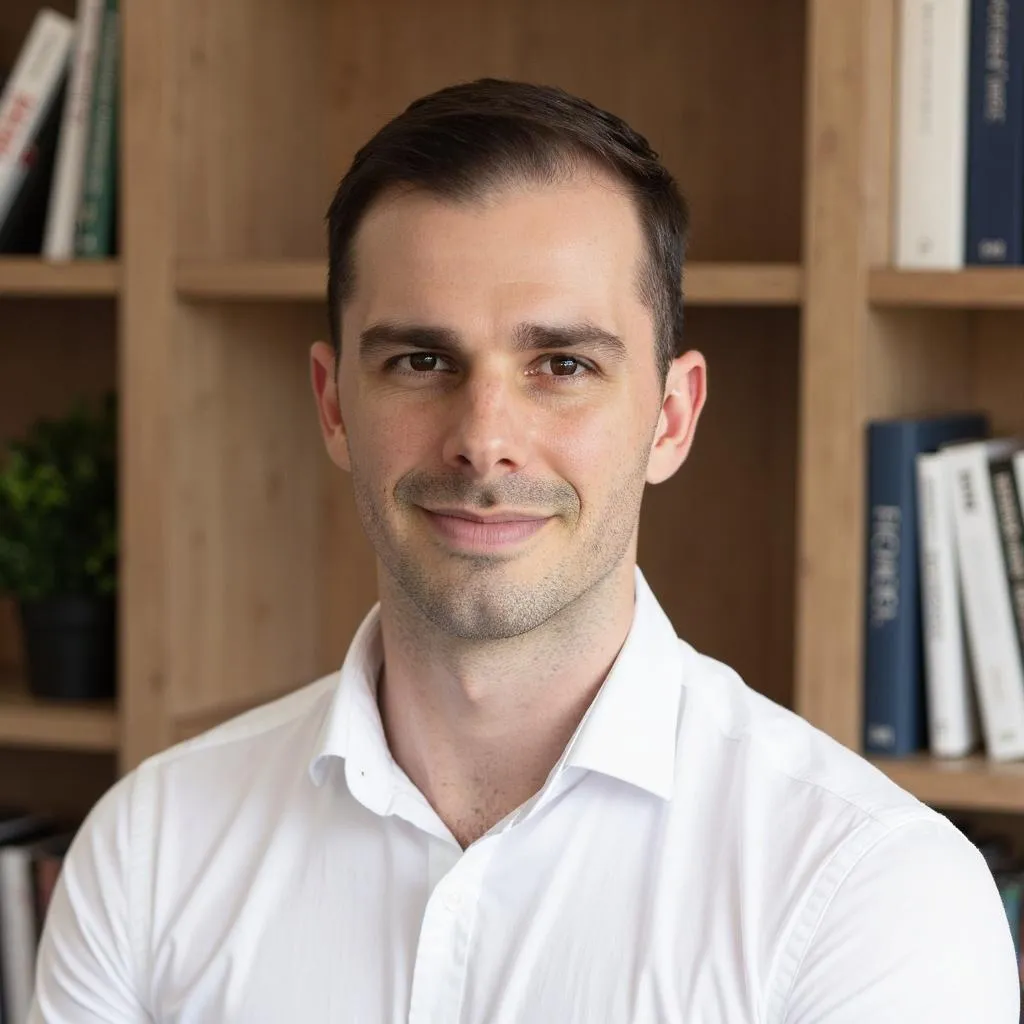
MEET Damian
Hey, I'm Damian
I'm a dietitian, and for my whole career I've been fascinated by one question: why is lasting change so hard, even when we know exactly what to do?
Chasing that question is what shaped how I work. Alongside my dietetic training, I completed a degree in psychological science, and I've spent thousands of hours in clinical practice helping people change, refining an approach that works at both levels: what to eat, and the deeper patterns underneath, the needs, habits and beliefs that decide whether change actually lasts.
I built my unique approach to lifestyle counselling because I kept meeting the same person: someone capable, someone who'd tried hard, someone handed plan after plan, or a prescription, and then left alone with the hardest part. If that's been you, I'd love to hear where you're at, what's important to you and how you want this journey to look.
Outside the clinic I'm a husband and dad of two here in Brisbane, which keeps me honest about what realistic, sustainable change looks like in an actual busy life.
Accredited Practising Dietitian (APD)
Degree in Psychological Science
Thousands of hours of 1:1 clinical practice